next up previous
Next: General describing function Up: 17/1/2003 by Chachra Previous: 17/1/2003 by Chachra
Describing functions method

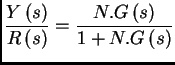
$\displaystyle \frac{Y\left( s\right) }{R\left( s\right) } = \frac{N.G\left( s\right) }{1+N.G\left( s\right) }\\ $ (2.1)

if

$\displaystyle 1+N.G(s)$ $\displaystyle = 0$ (2.2)
$\displaystyle \Rightarrow G(s)$ $\displaystyle = \frac{-1}{N}$ (2.3)
$\displaystyle \Rightarrow \vert G(j \omega)\vert$ $\displaystyle = \frac{1}{N}$ (2.4)

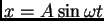
it is a pole. If $ x= A\sin \omega t$

$\displaystyle Y( A\sin \omega t,\omega A\sin \omega t) = \sum A\left( A,\omega \right)\left( \sin n\omega t+\phi \left( A,\omega \right) \right)$ (2.5)

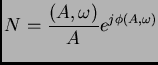
approximating the non-linearity N by a function of above type but only the first frequency:
$\displaystyle N = \frac{\left( A,\omega \right) }{A}e^{j\phi \left( A,\omega \right) }$ (2.6)

This implies non-linearity is substituted by a describing function.


Vishal Mahulkar (98D10043) 2003-02-14