Next:
4/02/2003 by Randhir Kumar
Up:
31/01/2003 by Pankaj Kumar
Previous:
Conditions for uniqueness and
Dynamic friction (Lugre) Model
(4.12)
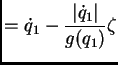
Friction State
(4.13)
(4.14)
(4.15)
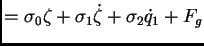
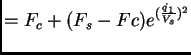
Velocity
(4.16)
(4.17)
(4.18)
(4.19)
assume
(4.20)
(4.21)
(4.22)
now analyze
(4.23)
will be Lipschitz as here we can see that
so the system as a whole will be Lipschitz.
Next:
4/02/2003 by Randhir Kumar
Up:
31/01/2003 by Pankaj Kumar
Previous:
Conditions for uniqueness and
Vishal Mahulkar (98D10043) 2003-02-14



 Friction State


 Velocity
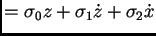

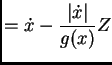

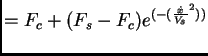


![$\displaystyle \dot x_{2} = u - [ \sigma_{0} x_{3} + \sigma_{1}\dot x_{3} +
\sigma_{2} x_{2}]$](img138.png)
![$\displaystyle \dot x_{2} = u - [ \sigma_{0} x_{3} + \sigma_{1}x_{2}- \frac
{\sigma_{1}\vert x_{2}\vert x_{3}}{g(x_{2})}+\sigma_{2} x_{2}]$](img139.png)
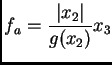
 will be Lipschitz as here we can see that
 so the system as a whole will be Lipschitz.


