 LAMP·Lab
IIT Bombay
LAMP·Lab
IIT Bombay
LAMP·Lab
IIT Bombay
LAMP·Lab
IIT Bombay
Laser Advanced Materials Processing (LAMP) Lab
IIT Bombay · Department of Mechanical Engineering
The Laser Advanced Materials Processing Laboratory studies how laser light interacts with matter — harnessing it for micro- and nano-scale fabrication, surface engineering, and next-generation manufacturing processes, through tightly coupled experiments and multiphysics modelling.
Femtosecond to nanosecond laser machining, texturing, and structuring of metals, glass, semiconductors, and composites at the micro and nano scale.
Fundamental studies of ablation, plasma formation, and ultrafast phenomena that govern how laser energy is absorbed and removes material.
Computational models of manufacturing processes — laser ablation, laser-assisted machining, additive manufacturing, and EDM — validated against experiments.
Data-driven and machine-learning approaches, in-situ monitoring, and process maps to improve precision, quality, and efficiency across laser manufacturing processes.
A glimpse of what our lasers can do — from cutting diamonds to writing art inside glass.

A butterfly pattern with various colours produced on a stainless steel sample.
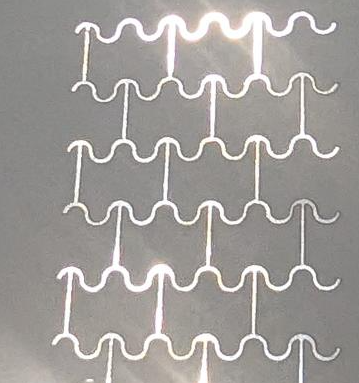
High-precision complex shape cutting on polymer samples.

High-precision micro-drilling on metal plates up to a few mm thick.

Micron and sub-micron surface textures produced on a silicon sample.

Prof. Marla leads the Laser Advanced Materials Processing (LAMP) Lab. His research spans laser-based micro- and nano-fabrication, the fundamentals of laser–matter interaction, and multiphysics modelling of manufacturing processes. He earned his B.Tech. and Ph.D. from IIT Bombay and held postdoctoral positions at the University of Illinois at Urbana-Champaign and the Technical University of Denmark before joining the faculty in 2017.
He currently serves as the Vice-Chairperson of the Student Wellness Centre, and Professor In-Charge of the Flourishing Hub, NSS IIT Bombay, and Group for Rural Activities.
⇅ Scroll inside the box for older news.
Three in-house laser systems, available for academic collaboration and industry use.
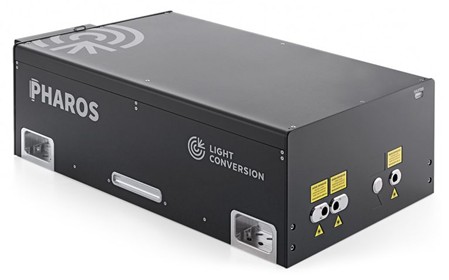
290 fs–10 ps pulses at 1030/515 nm, up to 10 W, 1 kHz–2 MHz. Spot sizes 10–40 µm for precision micromachining with minimal thermal damage.
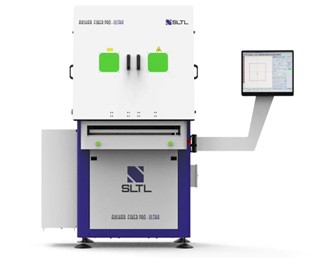
100 W MOPA fibre laser, 1064 nm, 5–500 ns pulses, scanning up to 12,000 mm/s — for colour marking, texturing, engraving, and cutting.
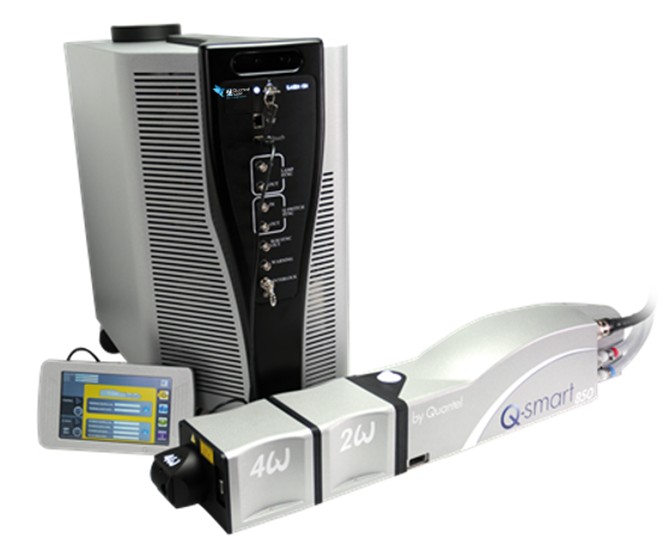
532/1064 nm, 9 ns pulses — for laser shock peening, LIFT/LIBT-based printing, and micro-texturing.